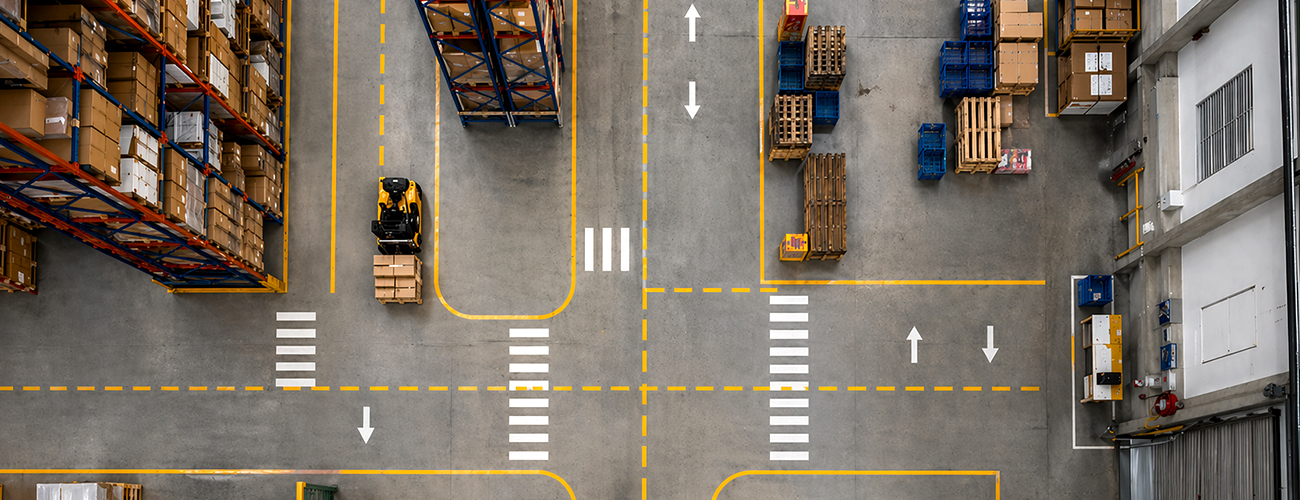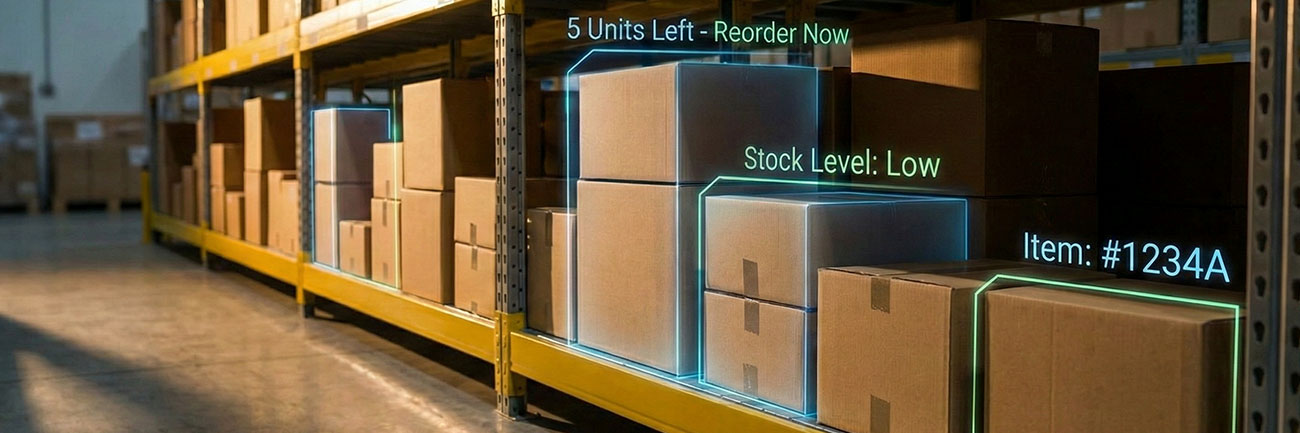
When most business owners hear the phrase AI in the warehouse, they immediately picture the same thing. They imagine a massive fulfillment center the size of a football field, filled with Boston Dynamics dogs doing backflips and robotic arms sorting packages at lightning speed. It looks expensive, futuristic, and completely out of reach for anyone who isn't Jeff Bezos.
But while we were all watching the robots, a quieter revolution took place.
The real AI opportunity for small businesses isn't hardware; it is software. It doesn't walk or talk. It lives in the cloud, plugs directly into your online store, and costs less than your monthly phone bill. It is boring, invisible, and incredibly profitable. This isn't about replacing humans with metal; it is about giving a one-person team the data intelligence of a Fortune 500 company.
The High Cost of Guessing
Entrepreneurs are usually visionaries when it comes to product design and brand building, but they are often terrible at prediction.
For years, the standard inventory strategy for small businesses has been the gut check. You look at a shelf, you look at your bank account, and you make a guess. I feel like we will sell a lot of these tuques in November.
This reliance on intuition is dangerous. It leads to two disasters. First, you buy too much, resulting in deadstock that gathers dust in your TradeSpace unit and ties up your cash flow. Second, and perhaps worse, you buy too little. You run out of your best-seller two weeks before Christmas, and because you didn't account for supplier lead times, you have nothing to sell during your busiest month.
In a one-person operation, you are already the CEO, the janitor, and the marketing department. You do not have time to be a data scientist, yet your business survival depends on making data-driven decisions.
Tool #1: The Crystal Ball (Inventory Forecasting)
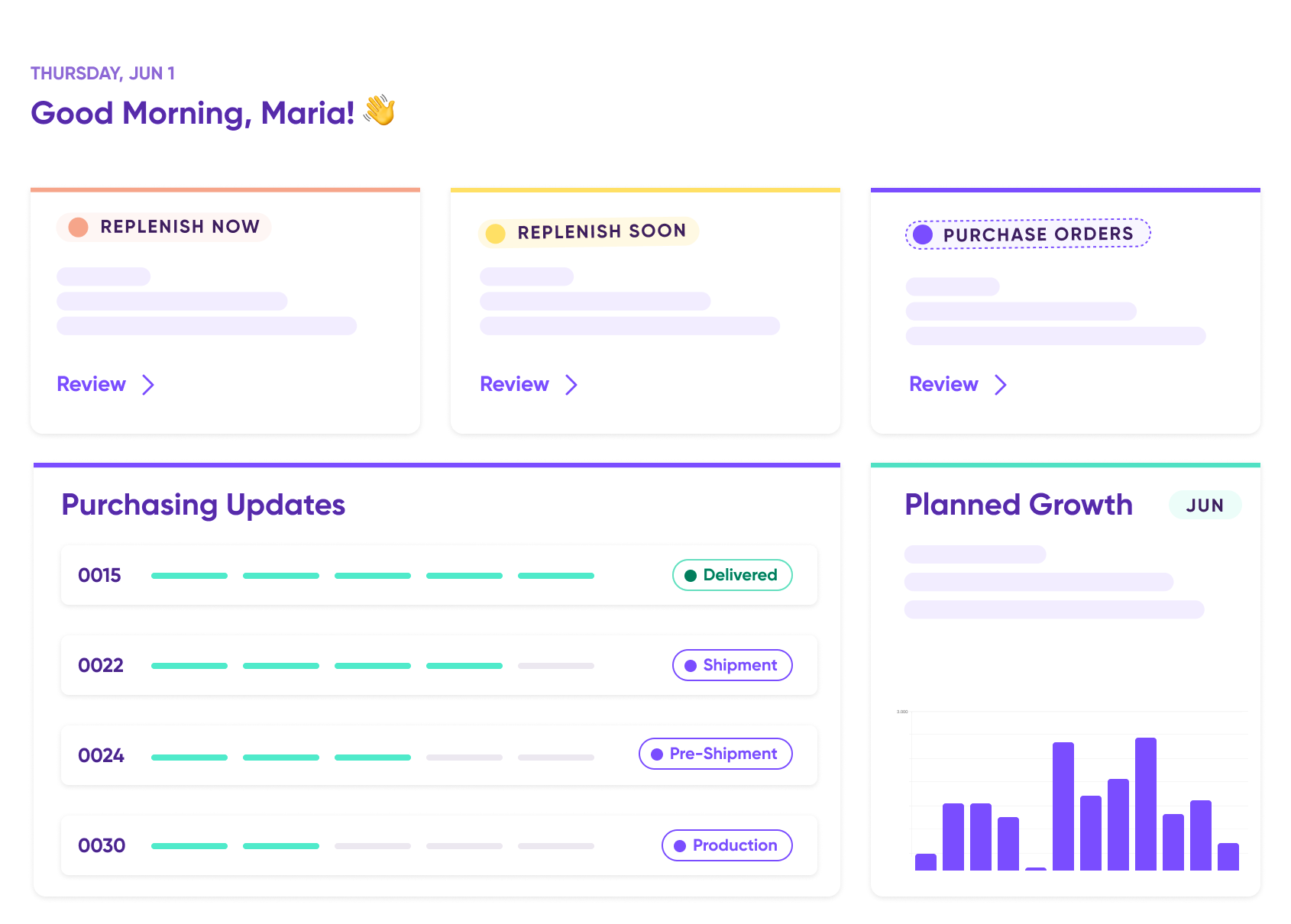
This is where the software shines. Applications like Cogsy or Inventory Planner act as a dedicated operations manager that never sleeps. These tools plug directly into your Shopify or WooCommerce backend and analyze your entire sales history in seconds.
Instead of you staring at a spreadsheet trying to guess if last July was a fluke; the AI looks at the patterns. It factors in seasonality; supplier lead times; and current sales velocity to tell you exactly what is going to happen next. It will send you an alert saying: Reorder 50 units of the Blue Parka by October 15th to capture the winter rush.
The financial impact of this is massive. According to the 2024 Workflow trends report from IBM, AI-driven supply chain workflows are helping businesses improve inventory turnover by up to 35% while simultaneously reducing costs. By trusting the data, you can run a leaner operation. You hold less inventory, which saves on storage costs and keeps your cash liquid, yet you sell more because you never run out of your best products.
The financial impact of this is massive. According to a report by McKinsey & Company, AI-enabled planning and inventory tools can reduce inventory levels by 20% to 30% by drastically improving demand forecasting. By trusting the data, you can run a leaner operation. You hold less inventory, which saves on storage costs and keeps your cash liquid, yet you sell more because you never run out of your best products.
Tool #2: The Perfect Path (Route Optimization)
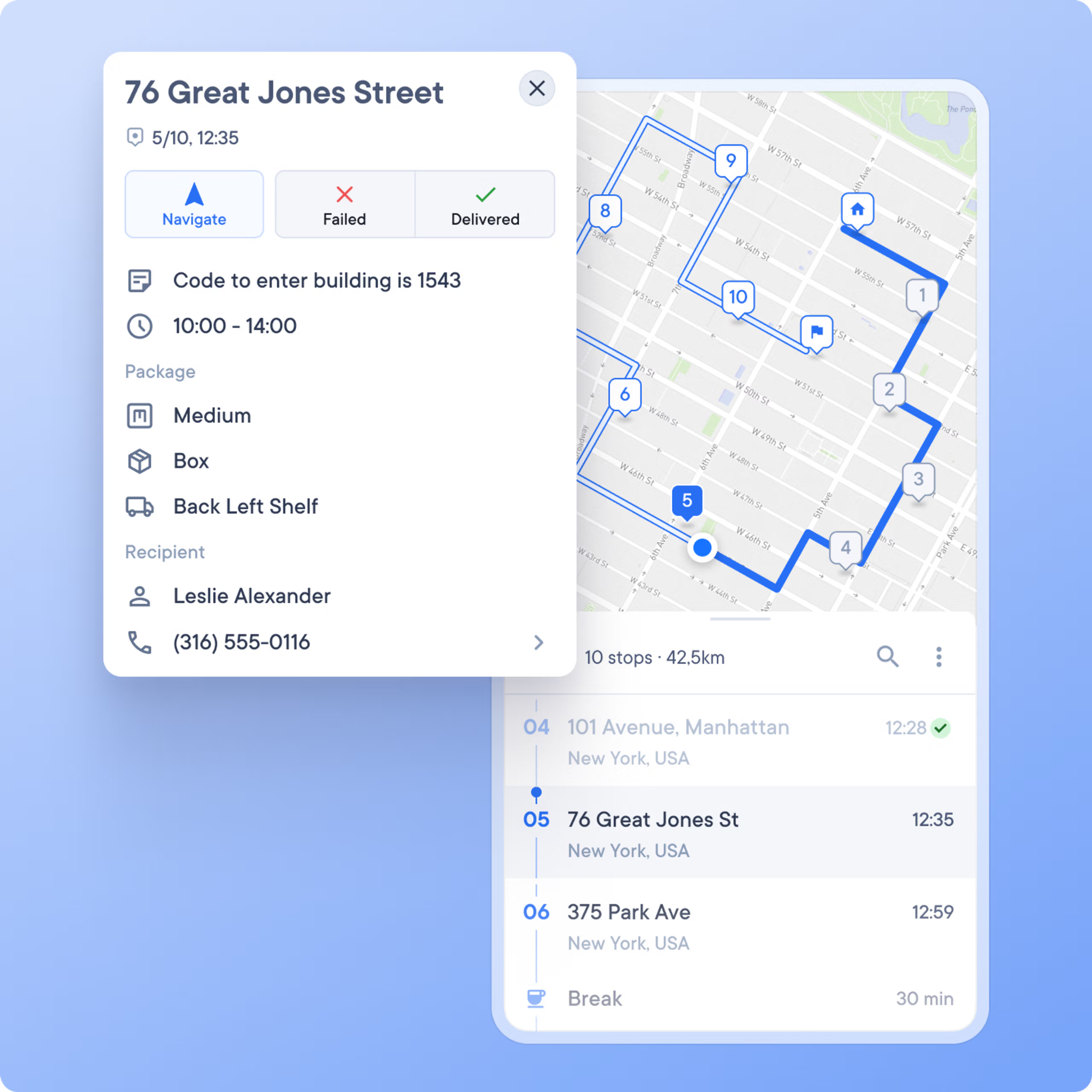
For many TradeSpace members, the warehouse is just the starting point. The real work happens on the road; specifically on the sprawling streets of Calgary. If you are managing your own local deliveries; trying to figure out the best order for 20 different stops is a mathematical nightmare that humans are naturally bad at.
This is where AI tools like Routific or Spoke step in. You simply upload a spreadsheet of your delivery addresses for the day; and the algorithm calculates the most efficient path in seconds. It accounts for traffic patterns; avoids difficult left turns; and groups stops logically.
The magic lies in efficiency. Route optimization software can reduce driving time by up to 40%. These tools can easily turn a chaotic 4 hour delivery loop into a tight 2.5 hour run. That is not just money saved on gas; it is hours of your life given back to you. In a small business; your time is the most expensive asset you have; and letting an algorithm handle the navigation is the smartest way to protect it.
The One-Person Army
This is the most empowering part of the modern logistics revolution. In the past; competing with the giants required a massive payroll and a sprawling headquarters. Today; the barrier to entry has collapsed.
By combining a TradeSpace unit for your flexible physical footprint with these accessible AI tools for your digital intelligence; a single entrepreneur can out-maneuver a large corporation. The big players are often slow, bureaucratic, and weighed down by legacy systems. You are agile. With a 300 square foot micro-warehouse and a predictive algorithm running on your laptop; you can forecast trends faster and deliver locally with more precision than a national chain.
You do not need a logistics department. You just need the right app.
Final Thoughts
It is time to delete the mental image of the robot and start embracing the algorithm. You do not need millions of dollars in venture capital to benefit from artificial intelligence. You just need to stop using Excel for everything.
Take an hour this week to audit your tech stack. Are you guessing on your inventory? Are you manually routing your deliveries? If the answer is yes; you are leaving money on the table. Once you have the software sorted; come visit us at TradeSpace. We can show you exactly where the physical side of your new high-tech operation can live.
Frequently Asked Questions

No. Most of the tools mentioned in this article, like Cogsy or Circuit, operate on a SaaS (Software as a Service) model. This means you pay a monthly subscription, often starting as low as $30-$50 per month. There is no massive upfront cost to buy servers or hardware.
Absolutely not. These applications are designed for merchants, not developers. They usually feature "one-click" integrations with platforms like Shopify or WooCommerce. If you can use a smartphone, you can use these AI tools.
Yes. Calgary is a sprawling city with distinct quadrants and traffic bottlenecks (like the Deerfoot). A human might group deliveries by neighborhood, but an AI considers traffic flow, turn direction, and distance. Saving 5 minutes per stop across 20 stops adds up to over an hour and a half of saved time every single day.
This is a common concern. While AI works best with data, many tools allow you to input manual estimates or competitor data to get started. As you make sales, the system learns your patterns. It gets smarter the longer you use it, so the best time to start is now.
TradeSpace provides the physical infrastructure: the warehouse units, loading docks, and forklifts. Joining TradeSpace connects you with a network of peers who can recommend the exact tech stack that works for their local business.