There is a ceiling every direct-to-consumer brand eventually hits. In the beginning, the digital ecosystem feels infinite. But eventually, the honeymoon ends. The algorithms shift, privacy updates fracture your tracking, and suddenly, your customer acquisition costs (CAC) are eating your margins alive. Market saturation sets in, turning what used to be a predictable growth model into a relentless, expensive grind. You end up spending more capital just to stand still.
The smartest founders don’t just keep feeding the digital ad-spend machine; they pivot. The natural evolution is stepping off the D2C treadmill and onto the retail floor. Specifically, unlocking B2B wholesale by supplying local Calgary retailers. It’s about bypassing the digital noise, leveraging established brick-and-mortar foot traffic, and securing massive, predictable multi-channel partnerships right in your own backyard.
But making this jump isn’t as simple as updating your website and printing a line sheet. Success in the wholesale arena isn't just about finding new bulk buyers, it’s an entirely different operational beast. To survive, scale, and actually protect your bottom line, you have to execute a fundamental, physical shift: completely rewiring your brand's infrastructure from parcel-scale thinking to pallet-scale logistics.
The Reality Check: Decoding the Margin Data
Let’s talk numbers. In the direct-to-consumer world, the headline figures are nothing short of intoxicating. We’re talking gross margins comfortably sitting in the 65% to 85% range. It looks fantastic on a pitch deck. But dig a millimeter below the surface, and that vanity metric starts to bleed. The D2C illusion is built on ignoring the invisible toll of doing business online. Once you subtract the skyrocketing customer acquisition costs (CAC), the relentless churn of digital marketing spend, the manpower required for high-touch customer support, and the agonizing expense of single-parcel, last-mile fulfillment, that 85% shrinks. Fast. You aren't just selling a product; you are financing an expensive, algorithm-driven acquisition machine.
Enter the B2B reality. At first glance, the wholesale margins feel like a downgrade, typically hovering between 40% and 60%. For founders accustomed to D2C math, taking that kind of haircut feels counterintuitive. It isn’t. It’s a strategic trade-off. Wholesale isn't about maximizing the margin on a single unit; it’s about maximizing the profitability of your entire operation. You are trading a slice of top-line margin for something far more valuable: operational stability and the total elimination of your most volatile overhead costs.
This brings us to the Calgary advantage. When you pivot to supplying local retailers, the economic engine of your brand fundamentally shifts. Instead of agonizing over ad spend to convert a single user on Instagram into buying one item, you are fulfilling purchase orders for hundreds (or thousands) of units at a clip. This localized, predictable volume is a massive operational lever. It smooths out erratic production runs, allowing you to unlock true economies of scale on the manufacturing side. More importantly, it entirely wipes out the logistical nightmare of last-mile delivery. You drop a pallet at a local multi-channel retailer, and suddenly, they are the ones footing the bill for in-store foot traffic and individual customer interactions.
The end result? A highly profitable, fiercely stable revenue stream that anchors your business, allowing you to grow without being held hostage by the next algorithm update.
The Operational Blueprint: From Parcels to Pallets
The strategy is airtight, but the execution is where the rubber meets the concrete floor of your warehouse. Transitioning from shipping polymailers to moving shrink-wrapped pallets isn't just a volume upgrade, it’s a fundamental rewiring of your entire supply chain. To handle the gravitational pull of bulk purchase orders without breaking your existing direct-to-consumer engine, you need to master four core operational pillars.
1. Segregating Inventory & Order Management
Let’s start with your tech stack. Trying to run a wholesale operation on a pure-play D2C backend is a recipe for catastrophic stockouts. You need a centralized Order Management System (OMS) or Enterprise Resource Planning (ERP) platform to act as the central nervous system of your business. This tech must be smart enough to act as a traffic cop: automatically routing your D2C clicks down the parcel-fulfillment lane, while funneling heavy B2B purchase orders into a dedicated pallet-level workflow.
But the software is only as good as the setup. You must draw a hard line in your product catalog by establishing dedicated B2B SKUs. Think case-packs instead of single units, paired with bespoke pricing tiers, volume discounts, and net-30 payment terms. Without this strict segregation, a sudden bulk order from a major Calgary retailer will cannibalize your D2C inventory overnight, leaving your loyal online customers staring at a "Sold Out" badge.
2. Re-Engineering the Pick & Pack Workflow
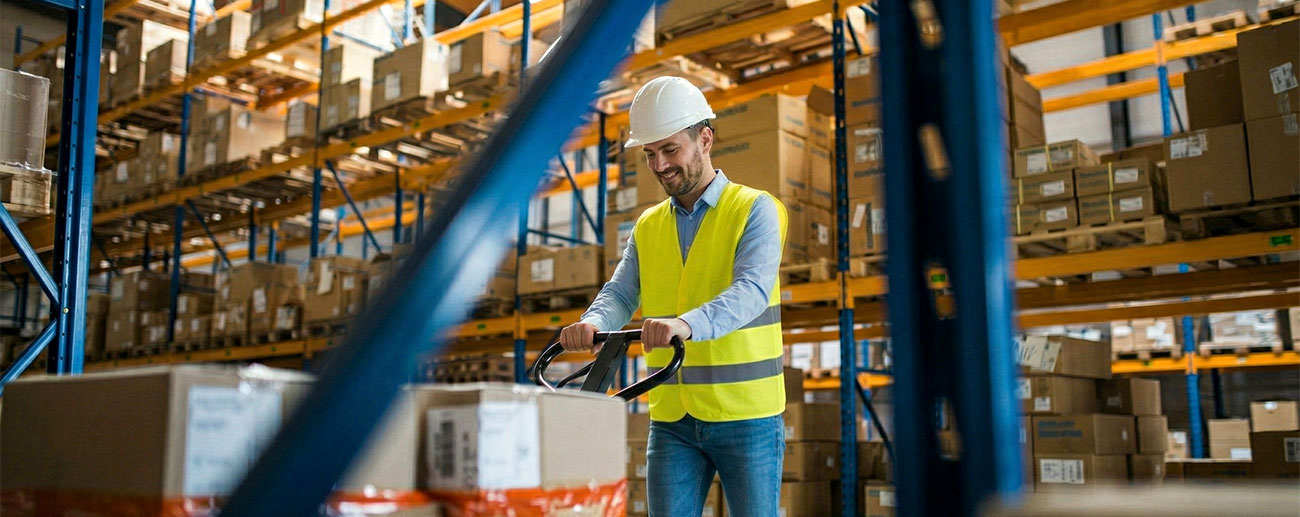
D2C is a game of tweezers; B2B is a game of forklifts. Your current fulfillment lines are physically optimized for loose-item picking from bins or dynamic shelving. Wholesale demands an entirely different choreography. You have to orchestrate a physical shift toward case-level and pallet-level slotting, building structurally sound loads topped with highly specific, bar-coded cartons.
This evolution requires a radical rewrite of your Standard Operating Procedures (SOPs). You need airtight protocols for receiving, cross-checking POs, staging, and labeling. Local Calgary retailers don't care about your internal growing pains; they care about tight, just-in-time delivery windows. If an SLA dictates that orders placed by 2 PM must ship the same day, your floor team needs the exact procedural playbook to make that happen without a single mis-shipment.
3. Redrawing the Warehouse Layout
Picture a busy commercial kitchen where one chef is plating delicate pastries while another is butchering a side of beef on the exact same counter. That is the congestion threat you face when you mix D2C and B2B workflows in the same physical space. It breeds chaos, bottlenecks, and expensive picking errors.
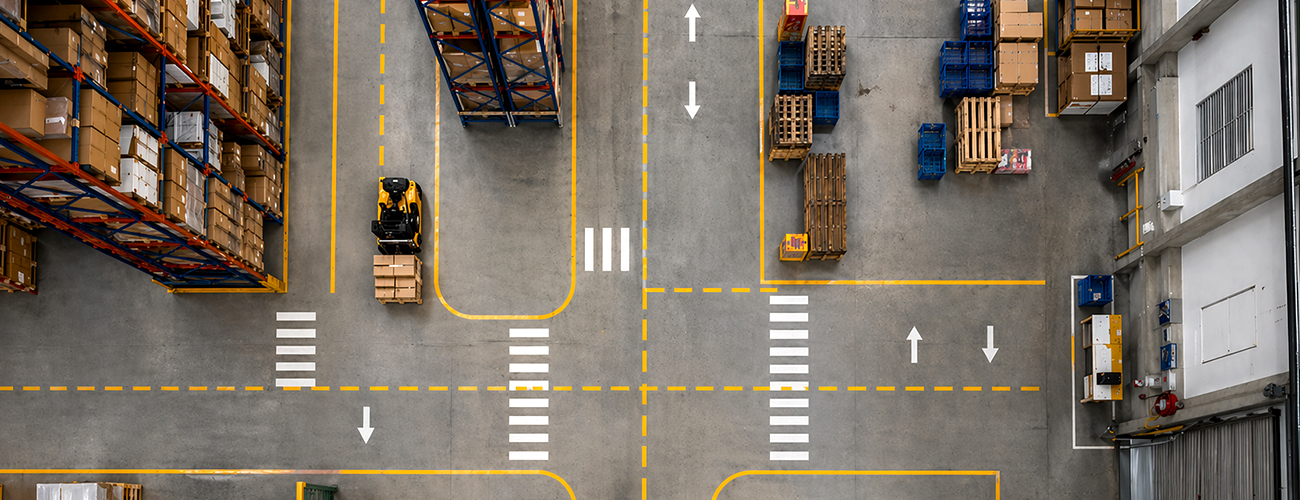
The solution is physical segregation. You need to redraw your floor plan to create dedicated "pallet-in / pallet-out" zones situated directly against your loading docks. This keeps the heavy, high-volume forklift traffic completely insulated from your delicate D2C parcel areas. Couple this layout with scalable racking systems and you create an environment capable of absorbing massive, sudden influxes of inventory without suffocating your day-to-day fulfillment.
4. Overhauling Reverse Logistics & QC
In the D2C space, returns are an annoyance handled with automated shipping labels and quick credit card refunds. The B2B standard is an entirely different beast. Wholesale buyers have zero tolerance for sloppy logistics, and when things go wrong, the financial mechanics are complex. You aren't dealing with a consumer; you’re navigating partial pallet credits, formalized damage logs, and rigid proof-of-delivery disputes.
To protect your margins from costly retailer chargebacks, you must establish uncompromising Quality Control checkpoints before a single pallet hits the dock. We are talking mandatory weight checks to catch missing inner cartons, comprehensive barcode scans to verify PO accuracy, and visual inspections of outer cases to flag damage before the truck doors even close. In wholesale, precision on the loading dock saves thousands in the boardroom.
The Secret Weapon: Flexible Warehousing
Here is the hard truth about scaling into B2B: your ambition will almost always outpace your real estate. The single biggest bottleneck in the D2C-to-B2B pivot isn't finding willing retail buyers; it’s finding a place to put their inventory without bankrupting your business. Traditional industrial leases are rigid, archaic traps. Landlords demand five-to-ten-year lock-ins, massive minimum square footage, and crippling capital expenditures just to fit out an empty concrete box. For a brand trying to agilely test the wholesale waters, signing a traditional commercial lease isn't a strategic investment, it’s a concrete anchor.
This is where the old playbook gets thrown out. Enter the shared warehouse model. For Calgary-based brands, facilities like TradeSpace offer a radical alternative: hyper-flexible, on-demand infrastructure. Instead of betting the farm on an oversized, empty facility, you can literally start your wholesale division with a single pallet position. It allows you to supply a small handful of local retailers without the crushing overhead. You rent exactly the footprint you need today, with the absolute freedom to scale dynamically into additional bays, specialized racking lanes, or entirely dedicated rooms as your order mix multiplies.
And in wholesale, you absolutely need that elasticity. Retail demand is rarely a smooth, upward curve; it is highly volatile. You have to be prepared for sudden, massive spikes in volume driven by aggressive seasonal promotions, 50-store trial launches, or localized co-promotions that require rapid replenishment. These events trigger intense "pallet-in / pallet-out" shockwaves. Because flexible spaces like TradeSpace already have enterprise-grade infrastructure built-in and ready to go (think commercial loading docks, 24/7 security, video surveillance, and climate control) you can instantly absorb that volatility. You meet the rigorous demands of your new retail partners flawlessly, all without spending six months and six figures retrofitting a building of your own.
Final Thoughts
This isn't an either/or scenario. The most resilient modern brands aren't abandoning their digital roots; they are synthesizing the best of both ecosystems. The ultimate commercial sweet spot lies in pairing the potent, direct storytelling of your D2C brand with the raw scale, built-in foot traffic, and sheer volume of local Calgary retailers. You own the narrative; they own the floor space.
Make no mistake: this pivot is an operational heavy lift. Moving from parcels to pallets demands a complete overhaul of your daily SOPs, a much smarter inventory tech stack, and a serious upgrade to flexible physical infrastructure. But for the founders willing to execute this shift, the reward is transformative. You trade the volatile, ad-dependent rollercoaster of digital customer acquisition for unmatched revenue stability and predictable, high-volume growth.
Is Your Warehouse Ready for the Pivot?
So, take a hard, honest look at your current fulfillment floor. If a major local retailer emailed you a 20-pallet wholesale purchase order tomorrow morning: could your warehouse actually handle it without bringing your D2C operations to a grinding halt?
If the answer is anything but an immediate, confident "yes," it is time to upgrade your logistics. Don't let rigid, long-term commercial leases throttle your brand’s evolution. Connect with TradeSpace today to book a tour. Secure the scalable, short-term pallet storage you need to build a bulletproof physical foundation for your B2B expansion. Stop stressing over space, and start fulfilling those bulk orders with absolute confidence.
Frequently Asked Questions

It all comes down to total operational profitability versus vanity metrics. While D2C boasts impressive 65–85% gross margins, those numbers are routinely devoured by skyrocketing customer acquisition costs (CAC) and expensive last-mile shipping. Wholesale trades a slice of that top-line margin (typically sitting at 40–60%) for massive, predictable volume and zero digital ad spend, ultimately creating a much more stable and lucrative bottom line.
Not without risking a logistical meltdown. Pushing bulk B2B purchase orders through a pure-play D2C backend is the fastest way to cannibalize your inventory and cause cross-channel stockouts. You need a centralized Order Management System (OMS) or ERP to intelligently route consumer clicks to your parcel lanes, and heavy retail POs to a dedicated pallet workflow using specific case-pack SKUs.
Absolutely. Mixing loose-item parcel picking with heavy-duty forklift traffic is a recipe for extreme congestion and expensive picking errors. D2C is a game of tweezers; B2B is a game of forklifts. Segregating your floor plan into dedicated "pallet-in / pallet-out" zones protects your daily D2C fulfillment from the chaotic gravity of bulk wholesale orders.
D2C returns are usually single-item refunds handled with a quick shipping label. B2B reverse logistics are an entirely different, highly formalized beast. You are dealing with partial pallet credits, strict damage logs, and rigid proof-of-delivery disputes from major retailers. Surviving B2B returns requires establishing aggressive, proactive Quality Control (QC) checkpoints directly on your loading dock.
Skip the traditional, rigid five-year industrial lease. The most strategic move is leveraging a shared, flexible warehouse model like TradeSpace. This allows you to start your wholesale division with a single pallet position to test the market, giving you the elasticity to scale your footprint up or down dynamically to absorb the volatility of seasonal retail demand.