There is a specific milestone every founder dreams of: getting the keys to the warehouse. It feels like legitimacy. It means you have graduated from the garage or the basement. You imagine branding the door, setting up the racking, and looking out over a kingdom of pallet jacks that is exclusively yours.
But in the current economic climate, that dream often turns into a financial nightmare.
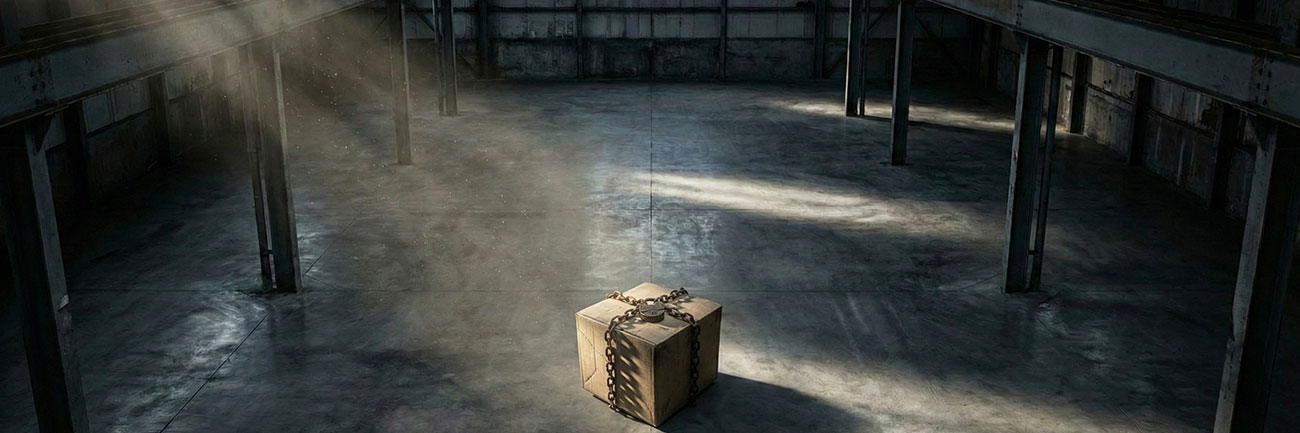
The ink on the contract looks permanent because it is. In a volatile 2026 economy, the traditional 5-year industrial lease has become the single biggest liability for Calgary startups. Agility is now the only safety net that matters. A standard long-term lease is no longer a milestone to celebrate; it is a heavy anchor that can sink a company before it ever finds true product-market fit.
The 2026 Economic Forecast: A Perfect Storm
Startups in 2026 are navigating a minefield of heightened vulnerability. We are facing a potential perfect storm of economic pressures, including predictions of slower growth and a significant tightening of capital.
The Macro Context
The easy money era is over. Startups are facing severe funding crunches as venture capital dries up and investors retreat to safer assets. According to the PwC Annual Outlook 2026, global resilience is increasingly concentrated and fragile, as businesses grapple with policy uncertainty and rising economic risks. Compounding this is the issue of maturing corporate debt, which is straining operations across the board. Businesses that took on cheap debt years ago are now facing refinancing at much higher rates, squeezing their operational cash flow just when they need it most.
The Impact of Inflexibility
Historical patterns show that economic downturns ruthlessly amplify the pressure of fixed costs. When revenue dips, as it often does during a recession, a fixed expense like a 5-year lease becomes a stranglehold. It shrinks your runway and forces tough, often fatal choices, such as layoffs or distress sales. Data suggests that this lack of flexibility is a primary driver of insolvency, pushing over 90% of inflexible startups toward failure. In this environment, the ability to scale down is just as valuable as the ability to scale up.
Case Study: The Fall of a Calgary Startup
To understand the mechanics of the lease trap, let us look at a hypothetical scenario involving a local e-commerce startup launching a line of high-end fitness gear in early 2026.
The Setup
Fueled by early traction and optimism, the founders bet on rapid scaling. They signed a standard 5-year lease for a 5,000 sq ft warehouse in NE Calgary. The terms seemed manageable in a boom market: $25 per square foot annually. However, the math revealed a massive liability; a total financial obligation of $625,000 over the term, not including utilities or taxes.
The Turning Point
Mid-year, reality hit. A recession created a perfect storm for the young company. First, unexpected supply chain snarls and new tariffs raised their landed costs by 10% to 15%, erasing their margins. Simultaneously, consumer spending on discretionary goods like fitness gear dropped, and the venture capital funding they were counting on dried up completely. Suddenly, that 5,000 sq ft warehouse was full of unsold inventory that was not moving.
The Trap
Desperate to stop the bleeding, the founders tried to downsize. But the lease was a legal lock. They attempted to sublet the space, but in a soft market, there were no takers. The company ended up paying rent on idle space for 18 agonizing months while burning through its remaining cash reserves. The final blow came when the business folded by 2027. Because the founders had signed personal guarantees, the landlord came after their personal assets to cover the remaining lease balance. It was a classic fixed-overhead trap: the business died not because the product was bad, but because the lease was too heavy.
Why Long Leases are Hidden Killers
This story is not unique; it is a structural flaw in how startups approach real estate.
Timing Mismatch
The fundamental danger lies in locking in unadjustable costs before you have achieved true product-market fit. Startups operate in volatile growth cycles where needs change quarterly. Committing to a five-year footprint based on a six-month projection creates a dangerous mismatch. You are essentially gambling that your growth will perfectly match your square footage, which rarely happens.
The Subleasing Myth
Many founders sign long leases believing they can simply sublet if things go wrong. This is a dangerous myth. In a downturn, finding a sub-tenant can take 6 to 18 months. Even if you find one, you are often forced to offer deep discounts to compete with other vacant properties, compounding your losses rather than recouping them.
Personal Liability
Perhaps the most overlooked risk is the personal guarantee. Landlords almost always require founders to personally back the lease. This pierces the corporate veil, meaning that if your startup fails, your personal financial security; your home, your savings; is directly exposed to satisfy the landlord's debt.
The Agile Alternative: Shared Warehousing
The antidote to the lease trap is decoupling your physical footprint from a rigid timeline. Shared warehousing models fundamentally change the financial calculus for startups by converting real estate from a terrifying fixed cost into a manageable variable cost. As the on-demand warehousing market is projected to exceed $167 billion by 2026, it is clear that businesses are choosing agility over ownership.
The Model: From Fixed to Variable
In a traditional lease, you pay for the maximum space you might need in three years, regardless of what you actually need today. Shared warehousing flips this. You pay only for the footprint you occupy right now. If your inventory shrinks in February, your rent shrinks in February. This alignment of overhead with revenue is the definition of operational resilience.
The Numbers
The financial impact is immediate. By moving into a shared environment, startups can slash their overhead by 30 to 50%. This is not just about rent; it is about the hidden costs of running a warehouse. In a shared model, utilities, Wi-Fi, and maintenance are pro-rated. You are not buying a forklift for $30,000; you are sharing one. You are not hiring a full-time warehouse manager; you are leveraging shared staffing for fulfillment.
The Strategic Benefit
The most valuable asset in a downturn is cash, not space. Month-to-month terms allow businesses to preserve capital when it matters most. Instead of locking $50,000 into a lease deposit and twelve months of guaranteed rent, you can deploy that cash into inventory or marketing; revenue-generating activities that actually help you survive a recession.
The Calgary Solution: TradeSpace
For Calgary businesses, this is not just a theoretical concept; it is a tangible option available right now in the Northeast and Southeast industrial district. TradeSpace has established itself as the local leader in flexible industrial warehousing, offering a sanctuary for businesses that refuse to sign their future away.
The Offering
TradeSpace offers fully serviced warehouse units ranging from a micro 100 sqft to a massive 10,000+ sqft. The key differentiator is the terms: there are no long-term contracts. Members get 24/7 access to their private space, but they also gain access to enterprise-level infrastructure; loading docks, shipping, receiving, and heavy equipment; without the capital expenditure.
Real-World Proof: Epic Kidz
The model works. Take the example of Epic Kidz, a local success story. They started their journey at TradeSpace with just 1,500 sqft. Because they were not burdened by a 5-year lease or the cost of buying their own forklifts and setting up Wi-Fi, they could focus entirely on growth. As they scaled, they expanded their footprint seamlessly within the facility, using the communal shipping docks to handle increasing volume. They thrived not because they predicted the future perfectly, but because they chose a model that allowed them to adapt to it.
Final Thoughts
In the economic landscape of 2026, the ultimate competitive advantage is not the size of your warehouse, but the flexibility of your lease. The companies that survive the coming volatility will not be the ones with the most square footage; they will be the ones that can adapt their footprint to match their reality.
Don't sign your agility away. Avoid the Warehouse Lease Trap and keep your capital where it belongs: growing your business. Book a tour at TradeSpace today and see how scalable, risk-free warehousing can be the safety net your startup needs.
Frequently Asked Questions

Most traditional industrial leases in Calgary are structured as Triple Net. This means that on top of your base rent, you are responsible for a pro-rated share of the building’s operating expenses; including property taxes, insurance, and maintenance. In a volatile year like 2026, these costs are unpredictable. If the building’s insurance premiums spike or property taxes are reassessed, your monthly bill goes up immediately. It is an uncapped liability that you cannot control.
You can try, but it is rarely the clean exit founders imagine. In a soft Calgary market, finding a qualified sub-tenant can take anywhere from 6 to 18 months. During that entire period, you remain legally and financially responsible for every dollar of rent. Furthermore, most landlords require you to pay a substantial fee just for the right to sublease, and you may have to offer the space at a discount to find a taker, meaning you are still losing money every month.
If you only look at the base rent, a shared space might appear higher per square foot than a raw industrial shell. However, the raw shell is just a concrete box. You still have to pay for Wi-Fi, utilities, security, and expensive equipment like forklifts. At TradeSpace, these costs are bundled. When you factor in the saved capital on equipment and the lack of hidden NNN fees, most startups see an overall overhead reduction of 30 to 50%.
Yes. Your business does not operate on a 9-to-5 schedule, and neither do we. You get secure, 24/7 access to your private warehouse unit and all communal facilities. Whether you need to process an emergency order at midnight or receive a shipment at dawn, the infrastructure is there for you.
This is where the agility of the shared model shines. In a traditional 5-year lease, you are stuck in the same footprint regardless of growth. At TradeSpace, we allow you to scale up seamlessly. If you land a major contract and suddenly need 2,000 more square feet, we can often adjust your footprint or add pallet positions to your account within days; not months of legal negotiations.